In reading the final chapter of Baumeister (1997) book, the thoughts about the myths of pure evil struck me the most. Baumeister (1997) discusses how the myths of victims and the myths of the perpetrators are so vastly different, and that is one of the reasons why evil is so difficult to define. Further, victimization is essential to evil as they are the first people to spot this evil (Baumeister, 1997). I thought this was interesting as if victims are the largest part of identifying evil, why is the focus in the media more on the perpetrators? And if we focus on both the victims and perpetrators equally will this definition become less complex?
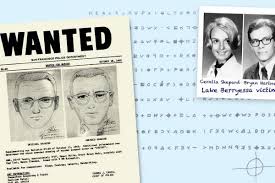
I believe that this case demonstrates the differences between the victims and perpetrators of evil. This shows that people will focus on the perpetrator so heavily instead of the victims, and further can show how the myths of evil can be so different. One woman who was caught by him actually escaped, and her thoughts on the acts of evil could provide really good insight into these actions. In turning focus to the perpetrator, it can make committing evil actions seem easily accessible to others and makes the definition of evil that much harder to create.
Victims and perpetrators obviously differ in their views about these crimes. Siem & Barth (2019) conducted a study on the differences of victims and perpetrators self-focus. They found that victims showed a higher degree of self-focus and shows how after an action is committed against them they shift their focus to themselves instead of feeling bad for the perpetrator (Siem & Barth, 2019). This goes back to the magnitude gap, (Baumeister, 1997) discussed as this demonstrates how both the victim and perpetrator can view the act so differently and this could be one explanation for why victims have a greater degree of self-focus.
These examples demonstrate how easy it is to focus on just the perpetrator when examining evil, but when someone opens it to examine the victim, one can understand more. In understanding how the victim can feel afterwards and how the magnitude gap comes into play, this can help to better understand why there is no concrete concept of evil. This is such a complex idea, with multiple parties with multiple views involved, and it needs to be treated as such instead of only focusing on the perpetrator. What do you think? Do you think that there needs to be an equal focus on both victim and perpetrator to find a more concrete explanation for evil?
References:
Baumeister, R. (1997). Evil: Inside human cruelty and violence. New
York, NY: W.H. Freemand and Company.
Siem, B., & Barth, M. (2019). (Not) Thinking about you: Differences in victims’ and perpetrators’ self‐focus after interpersonal and intergroup transgressions. European Journal of Social Psychology, 49(5), 1007–1021. https://doi-org.proxy1.lib.trentu.ca/10.1002/ejsp.2584
Travis, A. (2020). Is the Zodiac Killer Still Out There? Probably Not, but We Can’t Know For Sure. Retrieved from https://www.distractify.com/p/is-the-zodiac-killer-still-out-there
 Harper's Psyc 4720 Blog
Hello Harper, I really liked your post this week, it read like a story! I think your topic was very interesting. It seems to me you may not be fully satisfied with Baumeister definition; I’m not sure I am either. However, I like how you raised the point that perpetrators are more heavily focused on in the media, I definitely think this is true. Your post reminded me of a podcast I listen to called crime junkie, it covers stories like the Zodiac killer case (true crime) and most of the stories are told through explaining the perpetrator.
I like the article you included to examine the relationship between victims and perpetrators, I think this fits well with your topic. In regards to your question, I think it is good to have a focus on both sides of evil, however, I’m still not fully satisfied with the definition given in the chapter. I don’t know why, I feel like its missing something, what are your thoughts?
LikeLiked by 1 person
I definitely second your thoughts on the definition missing something. I think there are too many facets that one simple definition can not possibly explain all of the different layers. That being said, the definition does touch on some key points about evil but more work needs to be done in order to create a definition that works for all of the ways evil can present itself.
LikeLike
Hi Harper,
I think your topic this week brought up an important issue with the media today, placing all the focus on the perpetrator. Do you think this is part of what some evil people want when they commit evil actions? Getting attention for what they have done? I think one reason the focus is often on the perpetrators rather than the victims is to give the victims privacy while making other people aware of the actions of the perpetrator so they know to stay safe. Your example of the Zodiac Killer and your research article outlining the magnitude gap tie together your topic well, again I think the reason people focus on the perpetrator is because they want to understand why people do things like this and try to stop it from happening in the future. Do you think that the media does well with informing people about evil actions without glorifying them? To answer your question, I don’t think there should be more of a focus on victims, especially from the media, because I think those people deserve time to heal and move on from the situation. I think that focus on the perpetrator is important in order to catch and punish them, but again I think media coverage could make people more likely to commit crimes, for the glory.
Great post!
LikeLiked by 1 person
I definitely think that in some circumstances this is what evil people want to have happen when they commit these evil actions, as if they see others getting recognition they may want it too. I do not think this is always the case, however, as some people are just evil. I do think that the media has a tendency to glorify evil actions even without knowing it, as there are so many movies and tv shows that speak to the “famous” serial killers. The media needs to find a way to inform people what is happening without actually glorifying it. I think this would make it easier for victims to move forward in some cases.
LikeLike
Hi Harper! I really liked your post this week. I like your perspective on the victim, because I think they play a really big role in the commission of evil. I think without taking the victim into consideration, it’s a very one-sided understanding of evil. I think this is a common occurrence, when we hear about the person who committed the evil crimes and nothing about the circumstances that lead up to that. This is most common in cases of sadistic evil (from Baumeister’s book) where society is so fascinated with evil and the unthinkable that they completely bulldoze right over the victim in a sense. Out of fairness and justice, I think there needs to be more of a focus on the victim. But I think it’s all situation dependent. For example, in a cult, I think that 100% the followers in the cult (who are often victims to certain kinds of abuse) should be considered as well. On the other hand, rapists or killers who just took advantage of vulnerable individuals, I don’t think the victim played a role in what happened to them. When thinking about the victim or scrutinizing the victim, I think it has the potential to alienate or even blame the victim. What do you think?
LikeLike
That is a really good point that you made. I definitely think that there is a fine line between blaming the victim and telling their side of the story. The media and the people learning about the incident need to critically evaluate the story, instead of just reporting simply what happened. I think that when people only hear parts of the story, without the full picture this can lead to victim blaming.
LikeLike