Many people have heard of Zimbardo’s Stanford Prison Experiment, as it is one of the most famous examples of what happens when innocent people get caught up in roles that they play. Both the prisoners and the guards exhibited what occurs when you put good people in an evil situation to see what or who wins (Zimbardo, 2008). These individuals adopted new personalities to fit with the schemes already in their mind, as well as what the situation itself called for. This can be seen in many examples in the media, or in examples from history, such as the Nazi regime. Many of these soldiers were regular men who were put in this position and adopted to the roles given to them. What makes these people adopt these new schemes and personalities to fit with the situation at hand?? We will explore this a bit more, before we continue reading about the experiment.
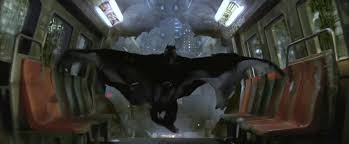
One example of the idea of roles coming into play is when an individual adopts a role that is unlike them in their everyday life. This explains the character Batman. Specifically, in the Dark Knight trilogy, which was incredibly popular a while back. Bruce Wayne in everyday life does not believe in killing people to bring the “good” back into what is considered an “evil” city (Gotham), however, when he becomes Batman, he began to exhibit what can be seen as evil behaviour and even killed people. This goes against his personal philosophy of not killing others, as he adopted a new role and was not actually Bruce Wayne. One example of this in the trilogy (Batman Begins) is when Batman and the antagonist, Ra’s al Ghul, get into a fight on a train while Batman tries to save Gotham City. He instructed someone else to derail the train, and purposely left his enemy aboard, with full knowledge that he would not live. Ordinarily, Bruce Wayne would not exhibit this behaviour and he would have saved this man in everyday life, but due to him being in a different role, he exhibited different behaviour. This relates to Zimbardo’s experiment as this good person was put in an evil situation, and it was seen that people would do what their role dictated, as Batman did.
Another example of identity roles transforming one’s personality is in gangs, especially when it comes to executing violent behaviour. Martin et al. (2017) performed research in Madrid on gang members and how their violent identity evolved due to being a part of this group. It was revealed that those who have less opportunities due to a lack of education, money or stable family life were more likely to become apart of violent gangs. These people viewed their peers as the most highly valued aspect of education, where many of them engage in the same violent behaviours (Martin et al., 2017). Further, these individuals relate their identities to the gangs they belong in, merging the two. This demonstrates that individuals who engage in violent behaviour look to their group for acceptance and acknowledgements in these acts, and this can change one’s personality.
Overall, it is shown that one’s personality can drastically change when they are given a new identity or way of life. This goes back to Zimbardo’s idea of putting good people in evil situations to see what they do, and no matter how good people perceive themselves to be, evil situations can win out. What do you think? Do you think the idea of roles is a good enough reason to explain why people do evil things?
References:
Isaac, C. (2016). 15 Times Batman Has Killed People. Screenrant. Retrieved from https://screenrant.com/times-batman-has-killed-people/
Martín, M.-J., Martínez, J.-M., García-Sánchez, R., Aramayona, B., Almendros, C., & Jiménez, C. (2017). Young people belonging to violent groups in the Region of Madrid. Psychosocial process model on the onset and evolution of violent identity behavior. Annals of Psychology , 33 (1), 120–132. https://doi-org.proxy1.lib.trentu.ca/10.6018/analesps.33.1.228541
Zimbardo, P. (2008). The Lucifer effect: Understanding how good people turn evil. New York, NY: Random House Trade Paperbacks.
 Harper's Psyc 4720 Blog
Hello Harper, I liked your post for this week!
The Batman perspective was interesting to me. Personally, when I was reading this I was thinking of how Bruce Wayne justifies saying these things because he knows its a fiction situation. Similarly, I feel as though Zimbardo would justify his means because the experiment wasn’t “real life” as well. Just a thought.
As for the article you described, I think the group influence and acceptance plays a huge roll on behavior. This is often seen in cults, acceptance in the cult influences people to do questionable behavior.
To answer your question, I do not think the idea of rolls is enough to explain or justify why people do evil things. People with power or rolls should understand morals and that is why I don’t think it is enough to explain why they do evil things sometimes.
LikeLiked by 1 person